
How Mailrun operates your outbound email infrastructure.
Not a mailbox order — an operating model. Every domain and inbox is built, prepared, launched, rotated, watched, and repaired on Microsoft / Azure, so your capacity stays healthy as it scales.
Horizontal scale beats vertical strain.
More sending should mean more domains, not more pressure on the same few. We add capacity sideways and keep density low — low density reduces the chance that one weak asset affects an entire campaign.
Six stages, one healthy pool.
Build
Microsoft domains and inboxes stood up at safe density.
Prepare
DNS, SPF, DKIM, and DMARC configured and verified.
Launch
Sequencer-ready handoff into a controlled ramp.
Rotate
Volume spreads across a resting domain pool.
Watch
Bounces, replies, complaints, and domain behavior tracked.
Bench / Repair
Weakening domains paused, repaired, or replaced.
Order to inbox in hours, not weeks.
Provisioning runs end to end without a manual queue. Five automated steps from purchase to a sequencer-ready inbox.
Domains
Registered or brought in, ready to provision.
DNS & Auth
SPF, DKIM, and DMARC set and verified.
Azure Inboxes
Mailboxes created and spread across your domain pool.
Mailbox Access
Credentials issued, ready to connect.
Sequencer Handoff
Clean files for Instantly, Smartlead, and more.
Fully automated — no manual provisioning queue.
Health is monitored, not assumed.
We track signals that can surface early warning signs before replies dry up — without turning your domains into a science project.
Bounce Shifts
Sudden changes in bounce rate flag list or domain trouble early.
Reply Quality
Real replies are a cleaner placement signal than opens.
Complaint Rates
Spam complaints are watched as a hard ceiling on volume.
Out-of-Office Behavior
Auto-replies hint that mail is landing where it should.
Domain Behavior
Each domain's pattern is profiled so outliers stand out.
Inbox Placement
Placement signals are used where they're reliably available.
The operating layer, on screen.
Views from the tooling that runs Mailrun infrastructure today — domain state, health scoring, mailbox verification, and sequencer handoff. Screenshots are from live systems, sanitized to protect customers.
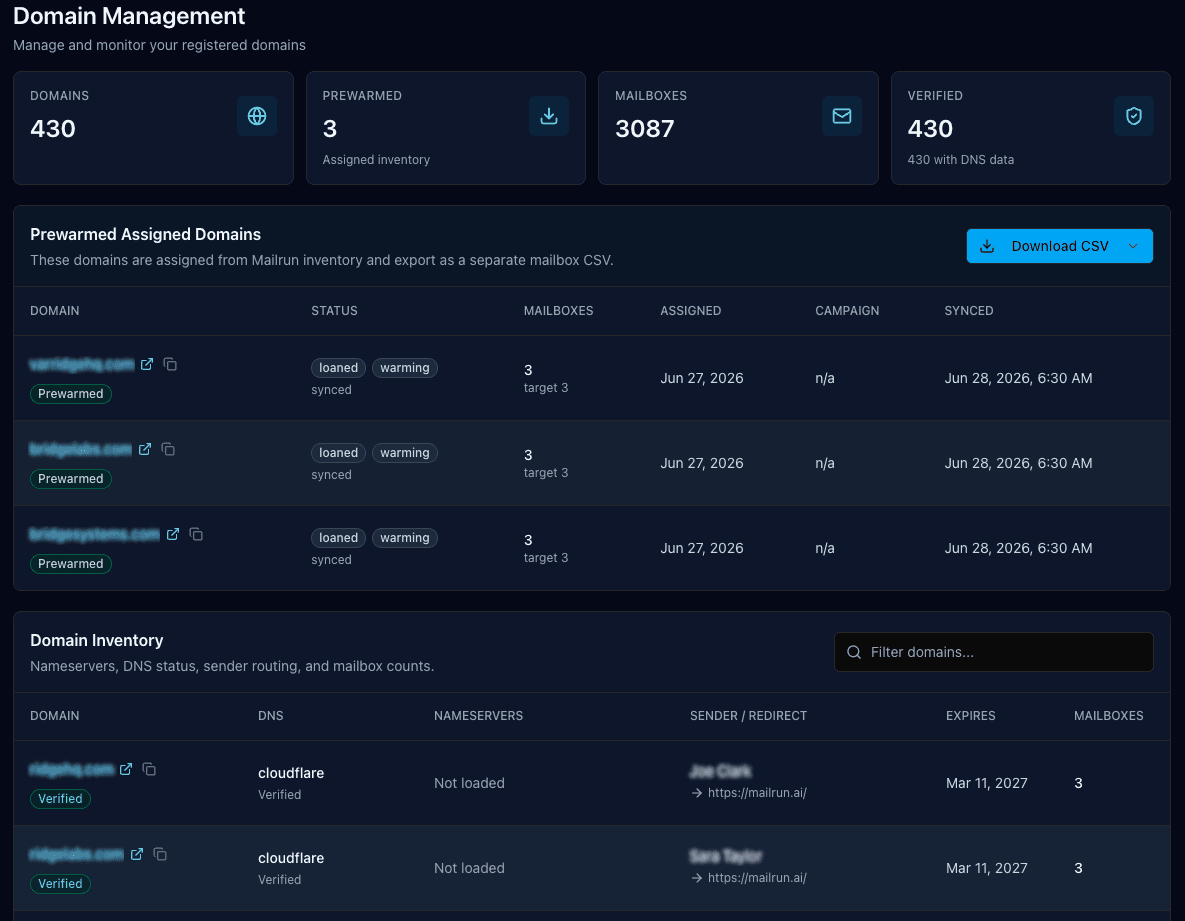
Every domain's DNS status, sender routing, expiry, and mailbox count in one place.
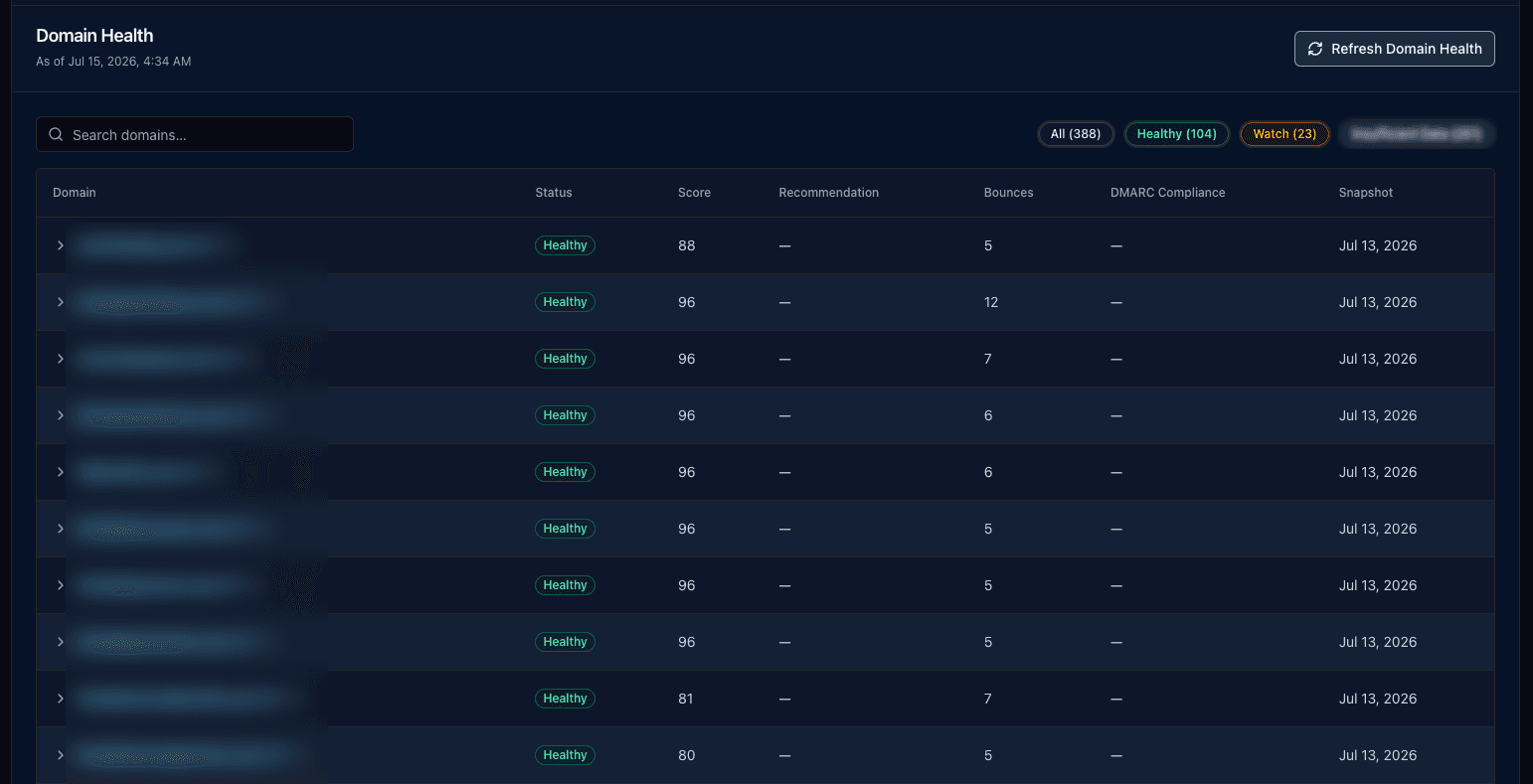
Scored health per domain, with bounce counts and DMARC compliance tracked over time.
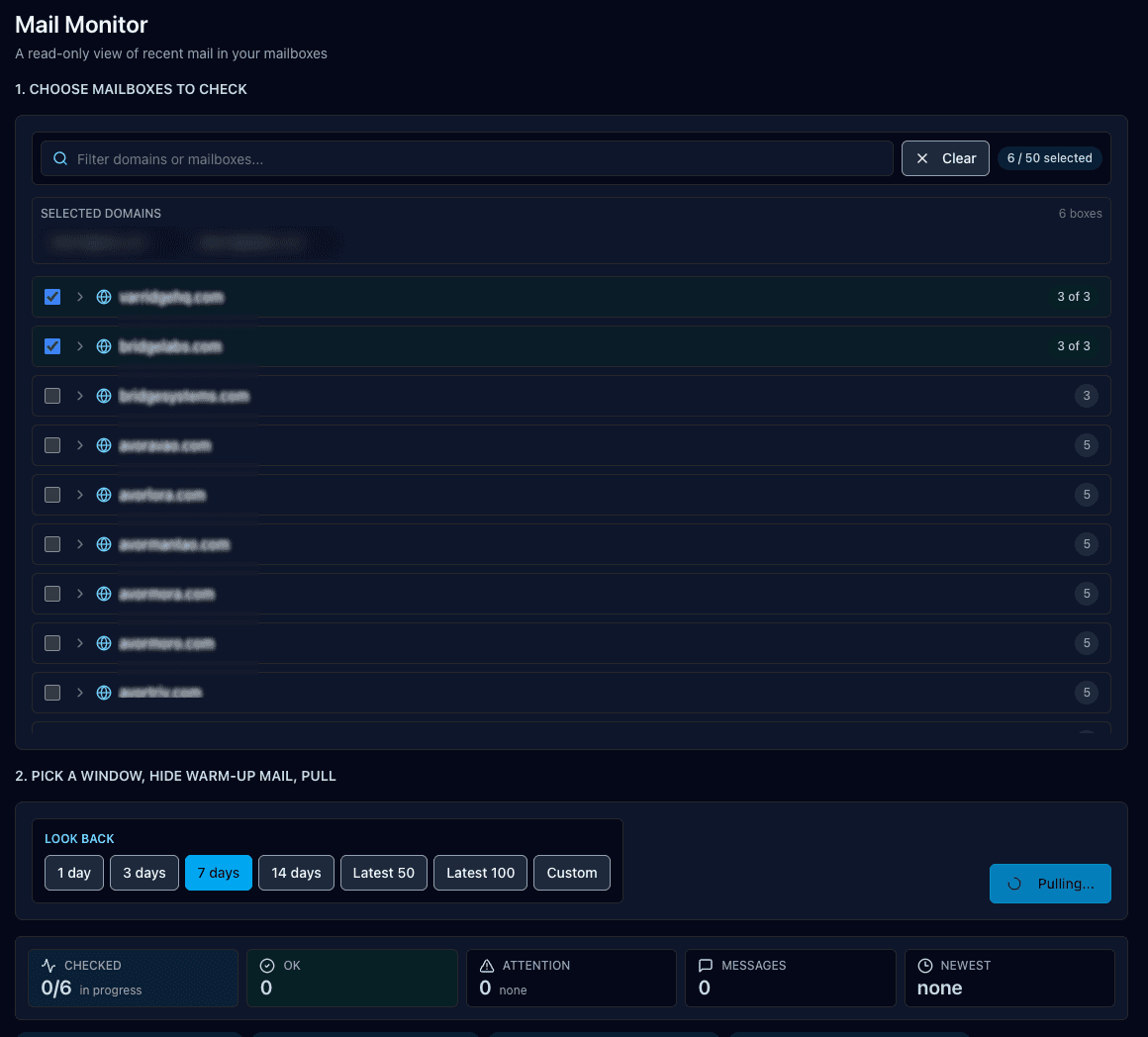
A read-only check of what's actually arriving in the mailboxes — warm-up mail filtered out.
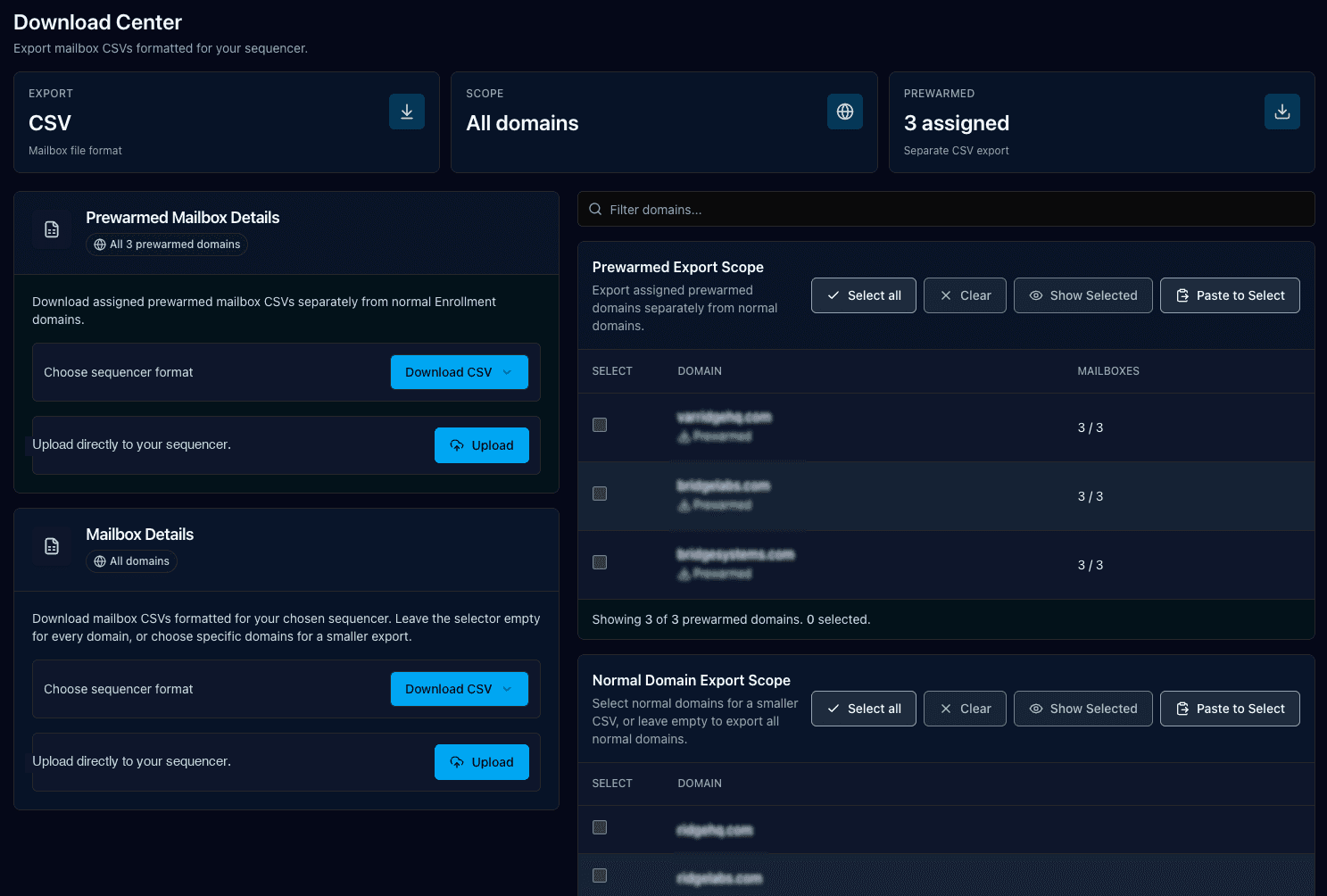
Sequencer-ready exports — CSV or direct upload, pre-warmed and standard kept separate.
Some views are operator tooling. Customer portal access varies by plan and rollout.
Pause. Rotate. Repair. Replace.
Domains rest and recover on the bench instead of getting burned to the ground.
Pause
Sending holds the moment a domain trends the wrong way.
Rotate Out
Volume shifts to healthy domains while the asset rests.
Repair
The domain is rehabilitated and re-warmed before reuse.
Replace
If it can't recover, fresh capacity swaps in cleanly.
What the bench looks like in practice: pool volume keeps ramping while a benched domain rests, because rotation absorbs its share.
Put the operating model to work.
Tell us your sending target and timing. We'll size the pool and map the cleanest path to live.